The Ciderkeeper’s Return: A Robins Hollow Legend
Legends & Lore from Robins Hollow
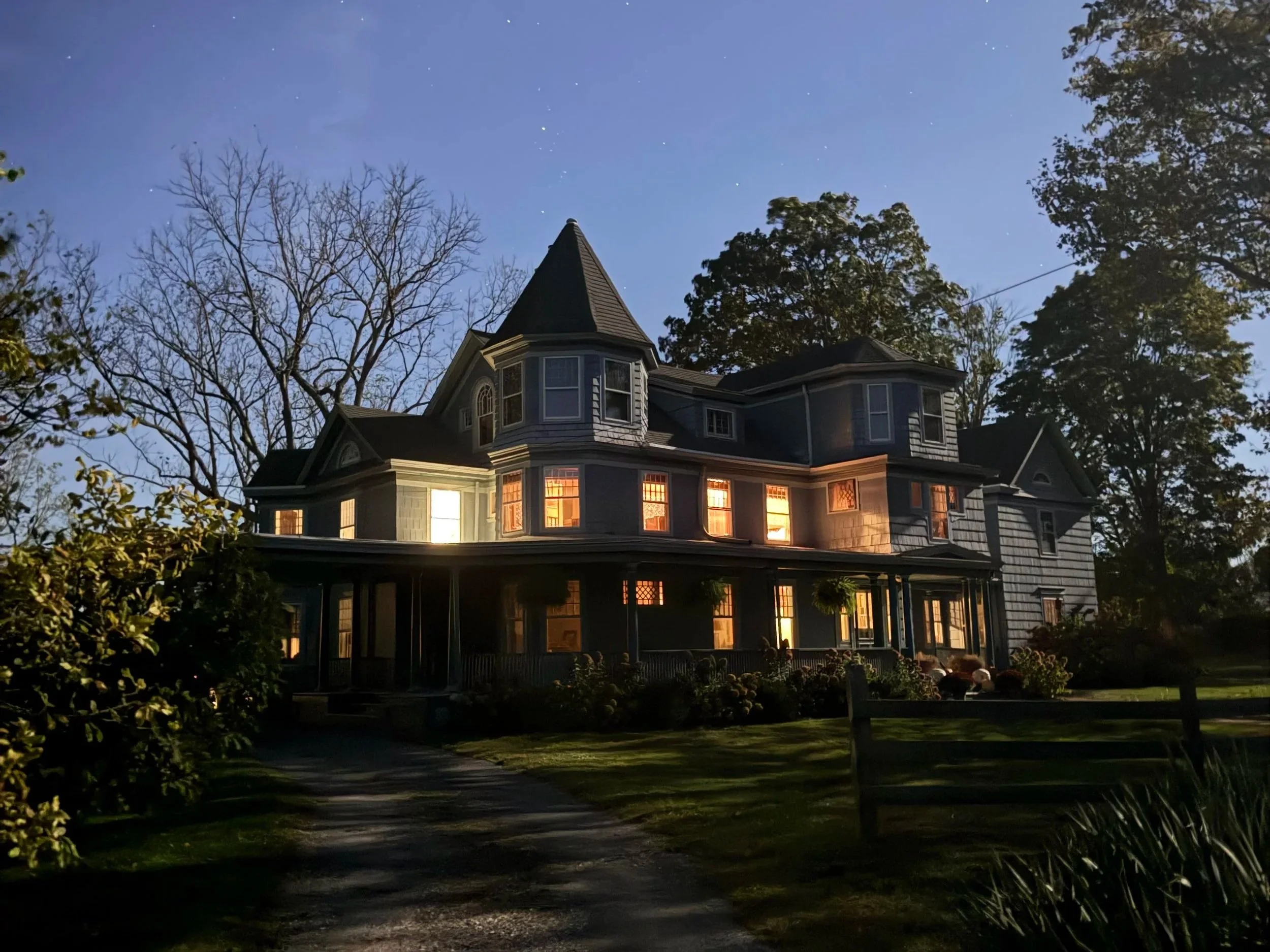
Every old house has its stories — the kind told when the lights are low and the fog presses close. This Halloween, we’re sharing one of ours: a favorite Robins Hollow tale about a certain ghost horse who never quite left home.
Welcome to Legends & Lore — where the history, mystery, and imagination of this old house meet.
The Ciderkeeper’s Return
Every old house keeps a ledger of its days. Some entries are written in paint and plaster; others, in the soft echo of hooves you can’t quite see—only hear—if you’re awake in the right kind of darkness.
At Robins Hollow, the neighbors will tell you, the ghost isn’t a woman in white or a lantern-lit caretaker. It’s a horse. A white one. Mischief in his eyes, moonlight on his back. They call him Boo Spookinay.
He was alive once—vividly so. Belonged to the daughter of the family who kept this place for forty years. Boo was eighty percent trouble, twenty percent gentle giant, and a loyal protector when the mood struck. Fences were suggestions; orchard signs, invitations. He’d leap the paddock and trot to the bay for a swim, or slip off to Wickham’s to “liberate” a few apples.
The stories say the girl and Boo were inseparable—racing toward the freshwater ponds, laughter and hoofbeats braided in the wind. He loved the land: the rolling pasture, the barn’s hay-dust warmth, the pond alive with frogs and garter snakes. Only the great white egret drew his ire—a rivalry that still makes the old-timers smile.
When Boo grew old, the family buried him with quiet ceremony in the north yard. The morning mist hung low, as if the world itself bowed its head.
Decades later, we walked that same stretch, deciding where tree work might begin, when two longtime neighbors approached—faces pale, hesitant, as if the fog itself had followed them. One was old enough to remember Mrs. Dayton, the last of the original family.
They stopped a few feet away, eyes fixed on the ground. “You’re standing on him,” one finally said.
And just like that, the legend stirred again.
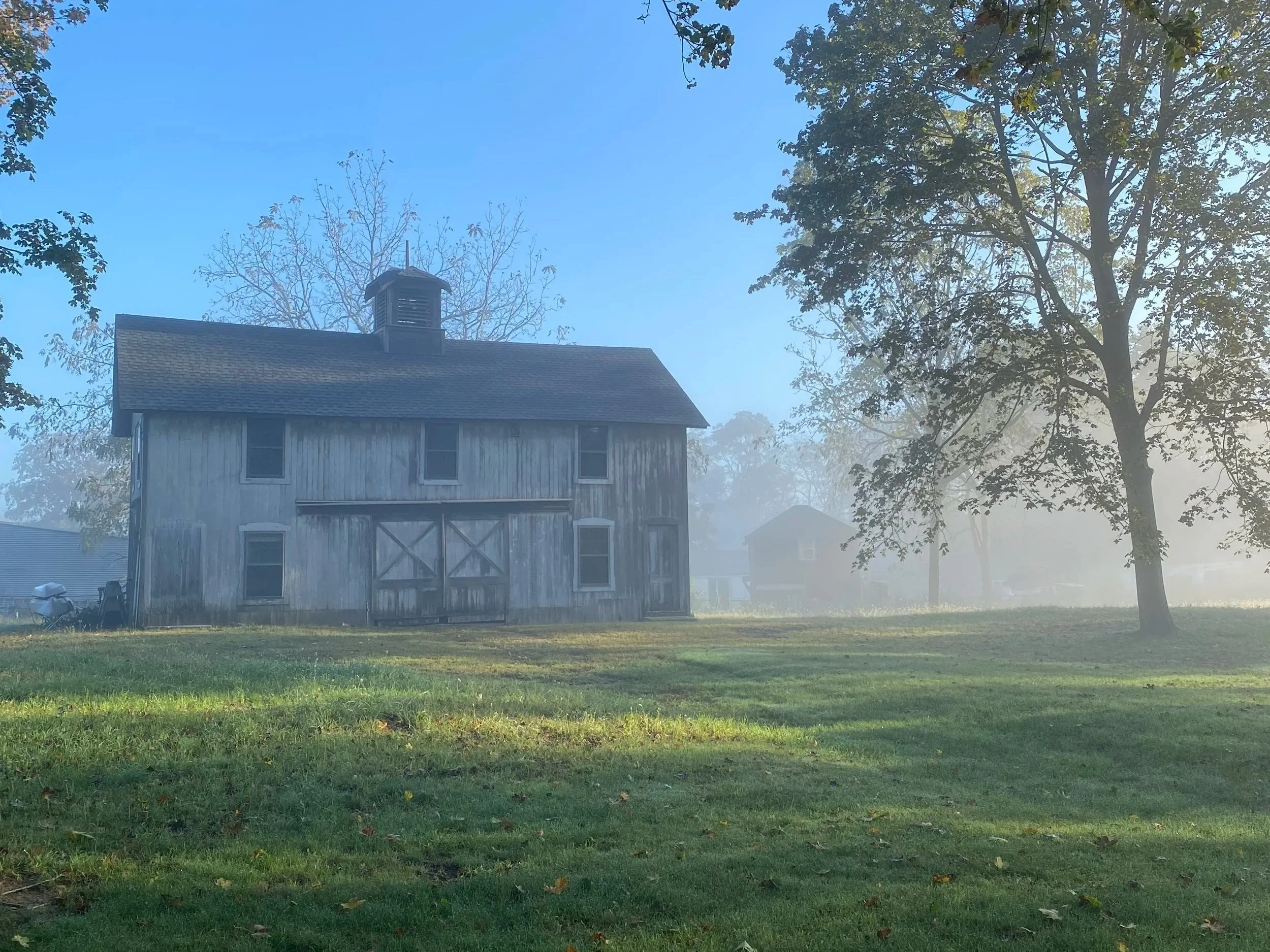
The barn in the north yard
The fog rolled in early this year—low and thick, the kind that turns the bay to silver and softens the edges of everything it touches. It’s been the talk of the village, that and the trouble at Wickham’s Orchard.
Not vandalism exactly—more like mischief. Barrels left open in the night. Rows of apples plucked clean—not trampled, but neatly chosen, as if someone had been shopping by lantern light. Only the best fruit taken, bright red and unblemished.
Sean laughed when we first heard it. Teenagers, probably, or deer clever enough to pick their own. But Wickham’s keeps hounds, and neither raccoons nor deer are known for stacking fruit in neat piles before they eat it.
“Maybe it’s the wind,” I said. “Or fog playing tricks.” But around here, fog doesn’t steal apples.
The next day, a neighbor stopped by to return a dish and lingered longer than usual. “You’ve heard about the orchard?” she asked, lowering her voice as though the trees might be listening. “They found prints this morning. Not human. Not dog. Something heavy—with rhythm.”
She hesitated. “It’s silly, I know, but people are talking—and you know how they get about Robins Hollow. I thought I’d check if you’d heard if anything strange has been stirring.”
I smiled, polite, though my stomach tightened. We’d heard that phrasing before: stirring. Around here, it usually means something with history has decided it isn’t done.
That night the fog pressed close against the windows. I could smell salt and something sweeter—cider maybe, or the memory of it. When I checked the porch before bed, a single apple sat on the top step. Deep red, wet with dew, as if it had rolled straight out of the orchard and stopped to rest.
“Raccoons,” Sean said when I showed him. “Or gravity,” I offered. But the apple didn’t look dropped. It looked placed.
By morning, Wickham’s crew had checked the cameras—nothing but mist and a faint gleam, like moonlight through glass. Someone dubbed it the Apple Thief of Southold. Someone else, a harvest haunting.
And then it happened here.
I’d gone out to bring in one last armful of wood before bed. The fog clung close, beading on my sleeves, swallowing the edge of the yard. Somewhere beyond the hedge came a sound—soft but weighted.
Clop… clop… clop. Slow. Intentional.
I froze. Nothing moved.
When I looked down, another apple sat neatly on the porch rail. This one had a half-moon bite missing from its side. The air smelled unmistakably of cider.
Sean said I imagined it. I almost agreed—until later, when the house fell silent and I heard it again: hooves on wet ground, steady and certain.
And somewhere, far off, a barrel lid knocked twice and fell silent.
The next morning, Wickham’s apples were untouched. But ours—though there isn’t a fruit tree on the property—had vanished. The refrigerator drawer, where they’d been tucked away, was empty. Clean. As if they’d never been there at all.
By dawn, the fog had thinned, but the air hummed—as if something had finished its task. A faint sweetness lingered: apples and hay, threaded like a memory.
That afternoon, while straightening the shelves in the kitchen island, I found the stack of papers we’d kept from the 2021 kitchen renovation: old invoices, a grocery list, and a recipe titled Dayton Family Cider — 1897 Harvest. Notes in the margin read: “tart apples from Wickham’s lower rows,” “sweet ones from the Hollow,” and, underlined once, Offer first pour to the Hollow.
My throat caught. We have no apple trees. We never have.
At dusk, the fog returned. I was setting the table when a soft thunk sounded at the back stoop. A wooden crate sat square on the mat, corners perfectly aligned. Inside: apples—Wickham’s deep red mixed with paler ones that gleamed almost silver under the porch light, the same we’d kept in the refrigerator drawer. Resting on top was a frayed ribbon, the kind that once tied neat along a bridle cheek.
“Sean,” I called, but before he reached me, the silence shifted. From the hedgerow came that sound—not noise so much as a sentence:
Clop… clop… clop.
Slow. Certain. Moving toward the house from the north yard.
We spent the night reading the recipe like a map. It wasn’t complicated; it was ritual. Gather, press, strain, warm with clove, share the first pour outside.
By morning, the kitchen smelled less like work and more like memory. We carried two mugs to the north yard and stood by the quiet ground where the grass grows softer. The cider was tart, then warm—not perfect, but true.
A breeze passed. The barn lantern flickered once. And in that pause, the meaning settled—Boo hadn’t come back to haunt. He’d come to keep traditions alive, to be sure the thread of the Hollow didn’t break just because the hands had changed.
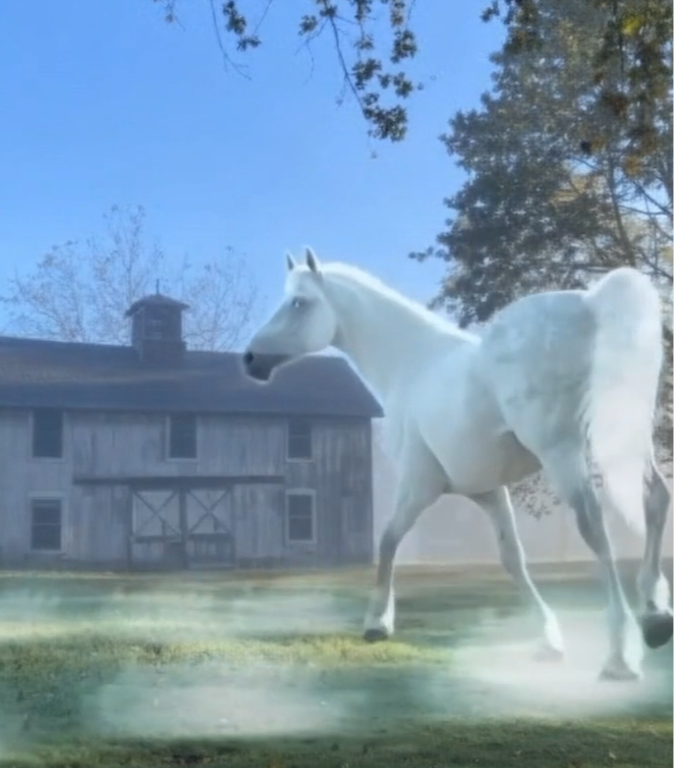
That night, the fog held back from the porch. The house exhaled. We sat by the fire, the cider pot simmering low—until a familiar rhythm sounded from above.
Clop… clop… clop…
Down the second-floor hall, past the triplet bedrooms. A door eased, settled. The air grew sweet again—apples, hay, a trace of leather warmed by a hand.
Sean looked up. I smiled. “Good horse,” I whispered.
Boo’s back on his rounds—and the Hollow is listening.
This Halloween, we’ll raise a glass of cider for Boo and listen for hoofbeats in the fog. Some stories never really end — they just find new caretakers.
Happy Halloween from Robins Hollow!
